
Cost Segregation: A Strategic Tax Savings Tool for Real Estate Investors in 2025 and Beyond
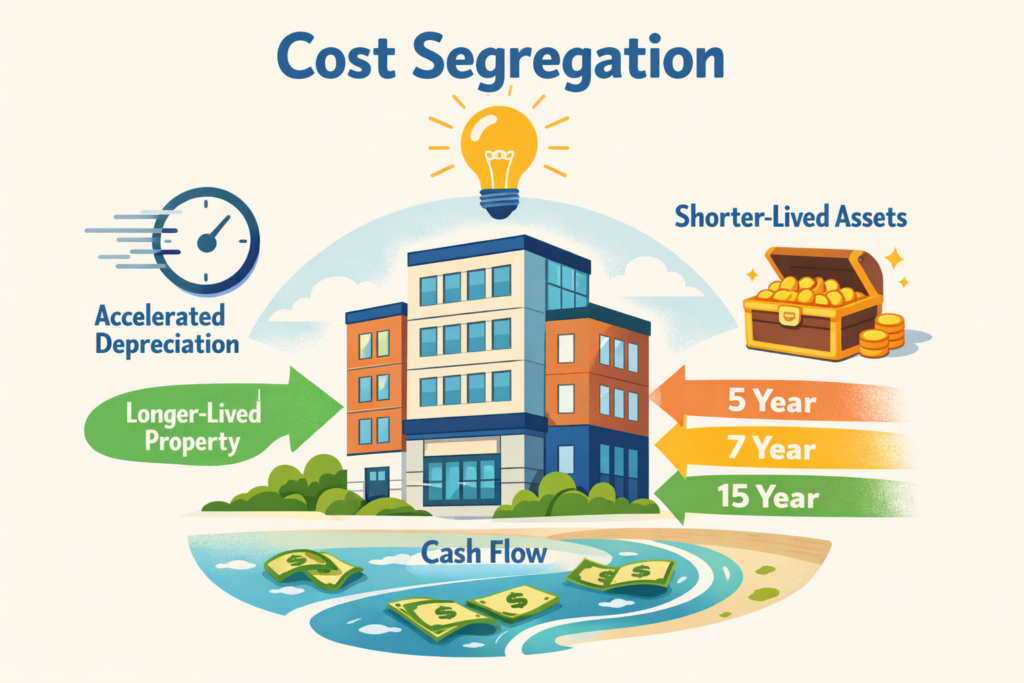
Cost segregation has emerged as one of the most powerful tax planning strategies for real estate owners and investors, especially in the wake of sweeping legislative changes in 2025. By accelerating depreciation deductions and optimizing capital recovery timing, cost segregation can unlock significant tax savings and improve cash flow. This article explains how cost segregation works, how it helps reduce taxes, and why it is more valuable than ever under the current tax environment.
Asset Sale vs. Stock Sale: A Framework for Evaluating M&A Deal Structure

When a business is being acquired, one of the earliest and most consequential decisions is whether the transaction should be structured as an asset sale or a stock sale. Many assume this is simply a buyer-versus-seller tax debate. The optimal structure is highly fact-specific and often comes down to a handful of drivers that can materially change the economics for both parties.
This article breaks down how to evaluate each structure, what typically drives the negotiation, and when the difference between the two is closer than you might expect.
OBBBA 2025: Permanent 100% Bonus Depreciation and New Expensing Rules
The One Big Beautiful Bill Act (OBBBA), signed into law on July 4, 2025, introduced reforms to the federal framework for capital cost recovery. Chief among these changes is the permanent reinstatement of 100% bonus depreciation, along with new expensing opportunities for certain production-related real estate. Together, these provisions significantly influence how businesses plan, finance, and implement major capital investments.
The Evolution of GILTI Under the OBBBA: A Comprehensive Analysis of the New NCTI Regime

The One Big Beautiful Bill Act (OBBBA), enacted in July 2025, introduces the most consequential shift in U.S. international tax rules since the Tax Cuts and Jobs Act of 2017 (TCJA). Among its most significant changes is the replacement of the Global Intangible Low-Taxed Income (GILTI) regime with the new Net CFC Tested Income (NCTI) framework.
Understanding the Changes to the SALT Deduction Under the One Big Beautiful Bill Act (OBBBA)

The State and Local Tax (SALT) deduction has long been an important provision of the U.S. federal tax code. It allows taxpayers who itemize deductions to reduce their federal taxable income by the amount of certain state and local taxes paid, including income, sales, and property taxes. Historically, this deduction was intended to prevent double taxation—that is, taxing the same income at both the federal and state levels.
Section 1202 QSBS: Expanded Tax Benefits Under the OBBBA

The Qualified Small Business Stock (QSBS) exclusion, governed by Section 1202 of the tax code, has historically provided a crucial incentive for investment in eligible C-corp startups. This benefit allowed founders and early investors to exclude up to $10 million in capital gains, or 10× the investment basis, from federal taxation, provided the stock was held for a minimum of five years.
Supporting a high-growth SaaS company in a successful $33 million exit

When a newly formed SaaS company engaged us 16 months ago, they set a clear goal: to prepare for a successful exit in 3-4 years. With $5 million in annual revenue, $1 million in EBT, and $3.7 million in current assets, the company had a solid foundation. Their overseas operations, established for two years, had built a strong recurring customer base, which quickly attracted buyer interest.
However, just one year into the engagement, the company received an unexpected $33 million acquisition offer, requiring them to fast-track their exit strategy. With proactive financial planning, clean accounting records, and compliance-ready systems already in place, the company was fully prepared to meet the rigorous demands of due diligence and execute a seamless transaction.
From Chaos to Clarity: Achieving Financial and Operational Excellence

After years of managing diverse revenue streams and expanding its operations, a growing business faced significant challenges in maintaining accurate financial records and efficient processes. The increasing complexity of its financial operations hindered leadership’s ability to make informed decisions and attract investor confidence.
Our firm was engaged to develop an achievable roadmap to get the organization back on track and establish a robust financial foundation.
Over the course of 12 weeks, we worked with the business’s leadership team to design a financial strategy aligned with their goals of improving operational efficiency, financial clarity, and stakeholder trust.
Beneficial Ownership Information (BOI) Reporting

As of January 1, 2024, the bipartisan Corporate Transparency Act (CTA) requires many companies operating in the United States to report information about their beneficial owners—the individuals who ultimately own or control the company. This law aims to combat illicit finance and strengthen U.S. national security.
Understanding the Three Key Approaches to Valuing a Business
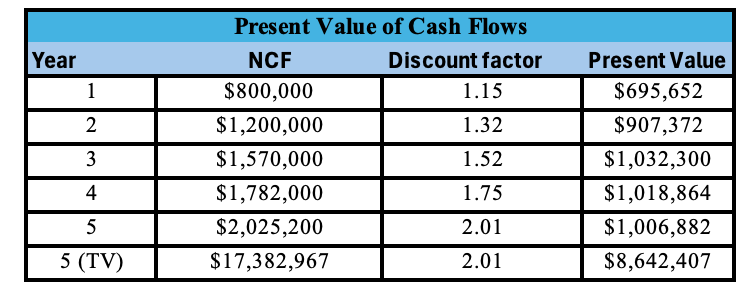
Valuing a business with precision is critical for a range of strategic decisions, from securing investor funding to executing a successful exit strategy. The three primary valuation approaches widely recognized in the field are the Income Approach, the Market Approach, and the Cost Approach. Each of these methodologies provides distinct perspectives and is applicable to various types of businesses and scenarios. Within these broad approaches, several specific methods can be employed, each chosen based on a set of unique factors and circumstances pertinent to the business in question. The methods discussed herein represent just a few of the available techniques.
Additionally, it is imperative to consider qualitative factors during the valuation process. Elements such as the strength and expertise of the management team, the strategic vision, market positioning, and the level of innovation and proprietary technology can significantly influence the perceived value of a business. These qualitative aspects often provide a more comprehensive understanding of the business’s potential for long-term success and sustainability, which can be pivotal in making informed valuation decisions.